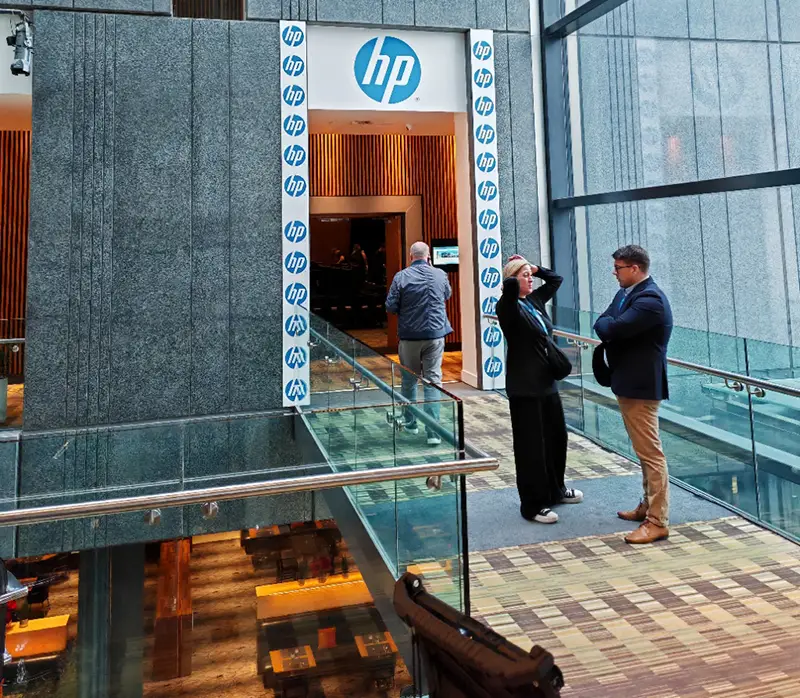
Earlier this year the DocFlow team spent a day at HP's Future of Work event in Manchester. It was the kind of industry day where you go in expecting the usual product roadmaps and come out with a clearer view of where the next two or three years of business technology are actually heading. A few notes from the day are worth sharing.
The Headline: AI Has Moved From "Coming Soon" to "How Soon Can You Deploy?"
Every session circled back to the same point. AI capability is no longer the constraint. Hardware, operational maturity and integration into the workflows people actually use are now the bottlenecks. For an organisation like ours — building DocFlow's AIDA on top of practical AI capability — this is the better problem to have, because those bottlenecks are tractable.
Conversations with NVIDIA
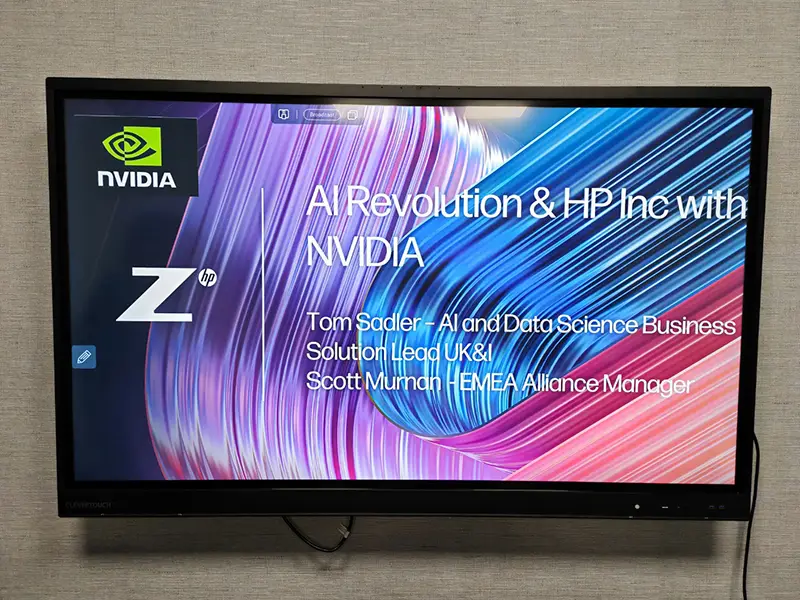
NVIDIA's breakout sessions made it clear that the on-device inference story has changed dramatically. The chips going into the next generation of business workstations are capable of running serious AI workloads locally, which has direct implications for DocFlow customers running on-premise deployments. Data sovereignty plus performance — that combination used to be a trade-off; it is now a baseline expectation.
AMD and the Workstation Roadmap
AMD's perspective on workplace silicon focused on energy efficiency and per-watt performance — both of which feed directly into the operating cost of running AI-augmented document operations at scale. For DocFlow customers planning multi-year deployments, the hardware curve over the next 24 months looks materially better than it has in a decade.
Snapdragon and the Mobile Story
Qualcomm's Snapdragon team showed where mobile and laptop silicon is heading: longer battery life, better local AI, less reliance on round-trips to the cloud for everyday tasks. For hybrid teams using DocFlow on laptops in the field, this is exactly the direction we want hardware to go.
Networking That Was Actually Useful
Industry events stand or fall on the quality of the conversations between sessions. This one delivered. We talked with IT directors from healthcare, legal and financial services who are all wrestling with the same questions: how to deploy AI safely, how to keep data sovereign, how to give staff real productivity gains without opening the door to risk. DocFlow's answer — AIDA built specifically for document intelligence inside a controlled environment — landed well with the regulated-sector audience.
The Evening at Cloud 23
The day finished with a reception at Cloud 23 at the top of the Hilton. The view alone was memorable, but the more useful part was the unstructured time with HP, NVIDIA, AMD and the other partner organisations. Conversations that would have taken three rounds of email got resolved in fifteen minutes. We walked out with a clearer roadmap for two integrations we are bringing into DocFlow this year.


What We Came Away With
- The market is consolidating around AI-native productivity — and the businesses that build for that early will pull ahead.
- On-device AI is real and getting better fast, which strengthens the case for DocFlow's on-premise and hybrid options.
- Regulated sectors are the next big wave, and DocFlow is well positioned because we built for compliance from day one.
- Partner ecosystems matter more than ever; the best AI deployments are layered, not monolithic, and that is exactly how AIDA is engineered.
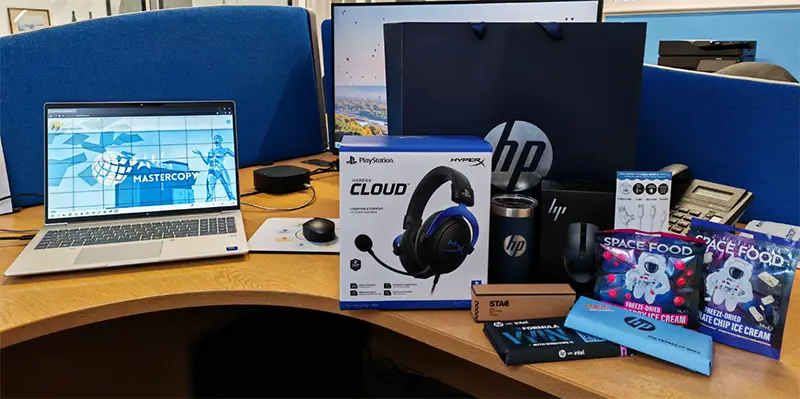
The HP Gift Bag
And yes, the gift bag was generous. We will not pretend it was the highlight, but it did not hurt.
Why Events Like This Matter
For a UK business building a serious AI-native product, days like this one are not about flashy keynotes — they are about pressure-testing your assumptions in the company of the people building the next generation of underlying hardware. DocFlow came back to Stockton with sharper plans, clearer integrations and renewed confidence that the road ahead for AI in regulated document management is wide open.
If You Want the Same Clarity for Your Business
The fastest way to understand where document management is heading is to see it in action. Book a DocFlow demo and we will show you the parts of the platform most relevant to your industry, and where AIDA is taking it next.